
Robots
Special equipment
Robots and equipment for the field and for special jobs: quadrupeds, the Exoskeleton, autonomous vehicles for factories and warehouses, plus robotic arms, scanners and machines.
01 · For you
For work that is hard, risky or repetitive.
A night patrol of a site, a load that travels the same route a hundred times a day, a long day on your feet in the field, a precise movement that has to be repeated without error. Quadruped robots, autonomous vehicles, exoskeletons and robotic arms were made for jobs like these. Industry and energy use them for patrols and measurements, warehouses and hospitals for transport, field crews and hikers for less effort, development teams and laboratories for experiments. Each group is introduced below.
- 01
The same every time
The same route and the same movement, with no fatigue at the end of a shift.
- 02
Where people would rather not go
Stairs, building sites, night shifts, long routes with a load.
- 03
People keep the decisions
The robot takes the route and the load, your people the work that needs judgement.
02 · Where it works
 01
Site patrol
The same route at the same hour, with a camera and a meter on its back. What it records is compared with the previous patrol.
 02
Hiking and mountains
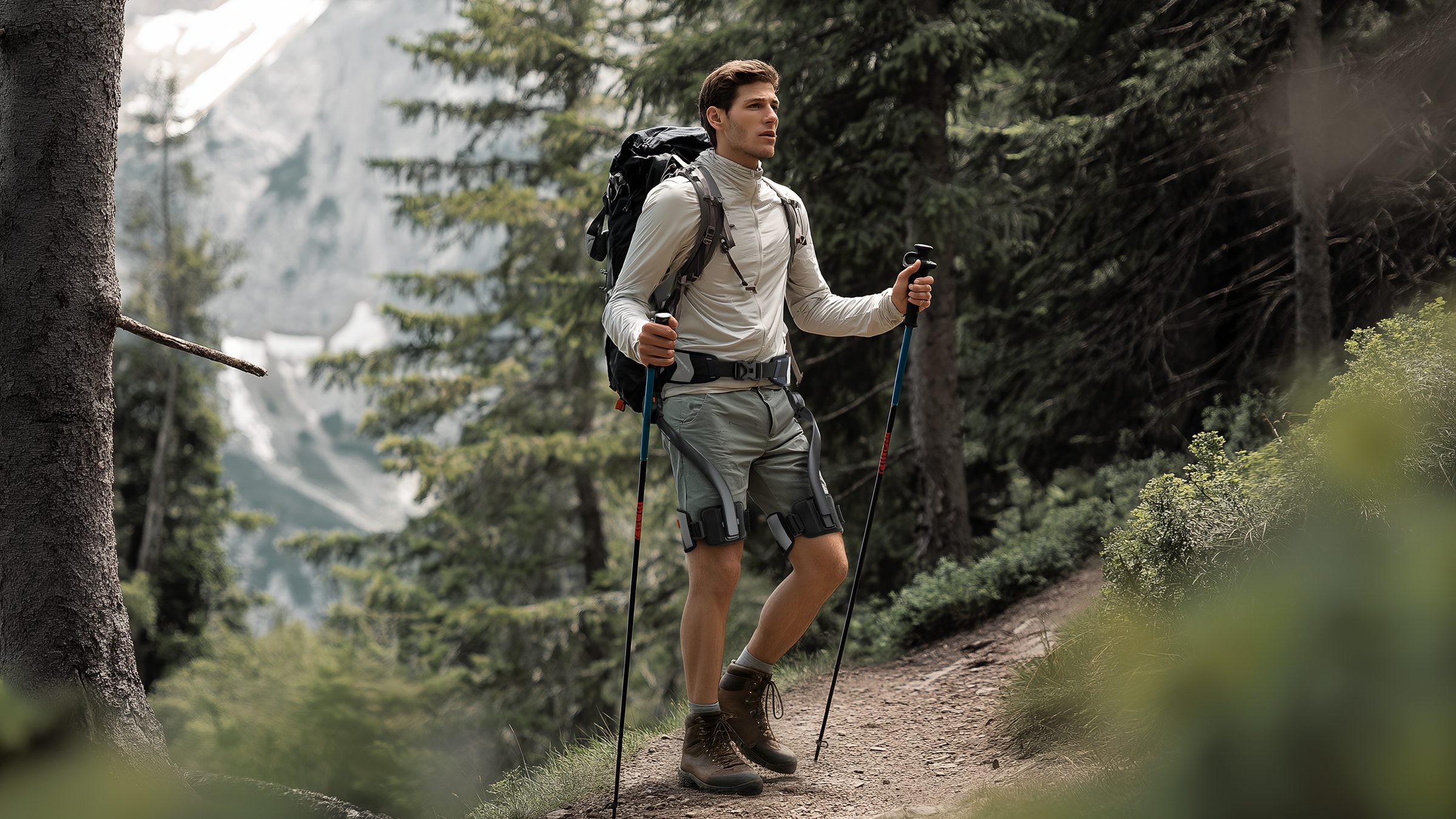
A long climb with a backpack and a day that lasts for hours. The exoskeleton helps with every step uphill.
 03
Warehouse and dispatch
Long routes between racking and the loading bay. Here a larger load is chosen, because the trip pays off only when the vehicle is full.
 04
Development and laboratory
The arm and the scanner are the tools of groups developing grasping, perception and navigation.
 05
Building site and field
Mud, gravel and stairs with no handrail. Here a legged robot does not stop where a trolley would.
 06
Sports fields and car parks
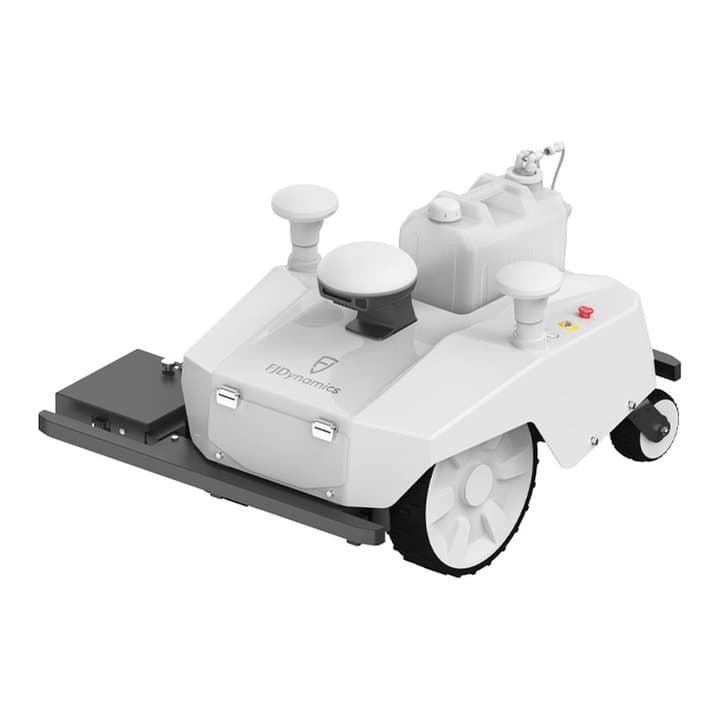
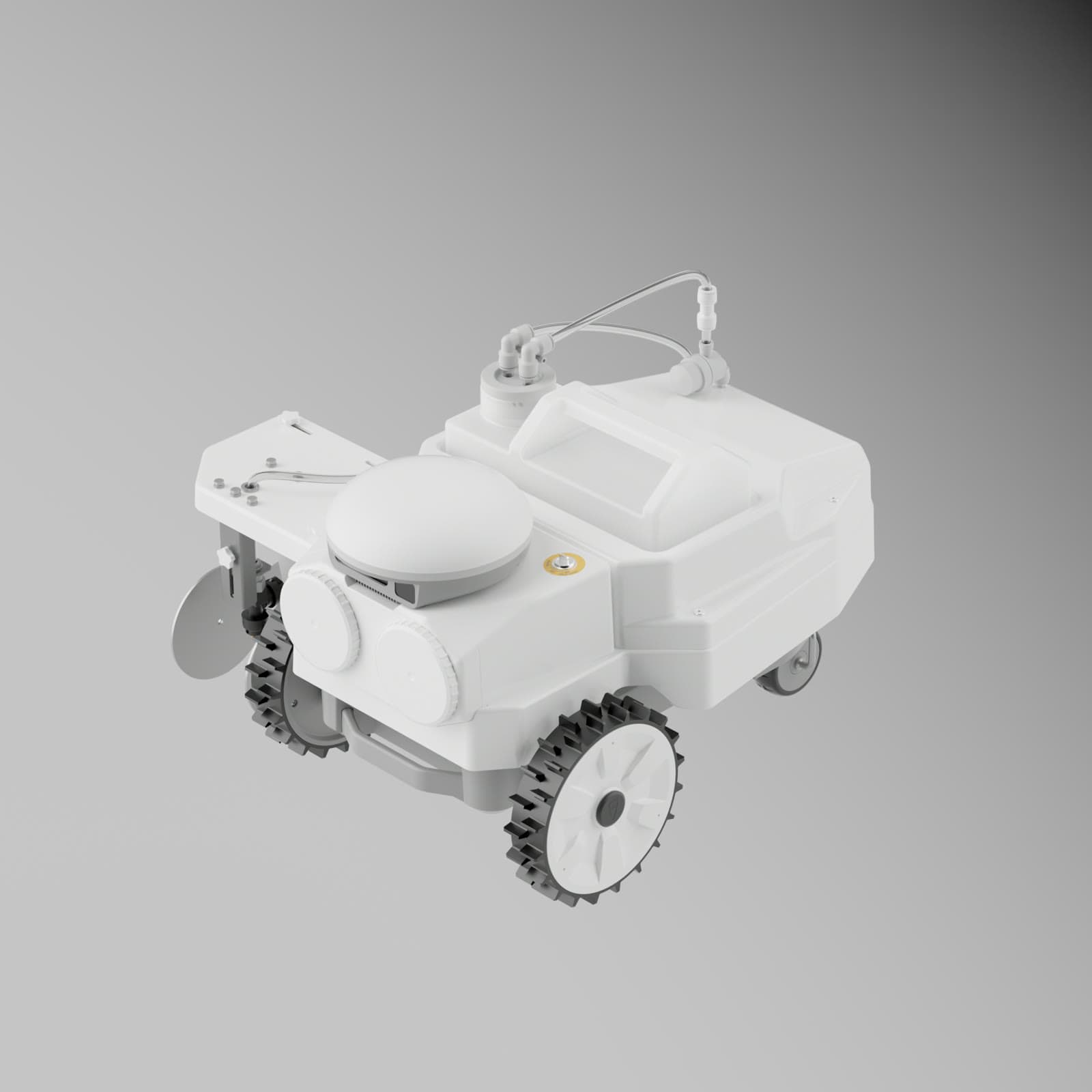
Lines on a football pitch, an athletics track or a car park that have to be repainted every season. PaintMaster Pro carries 20 litres of paint and runs for up to five hours on a battery.
03 · Group by group
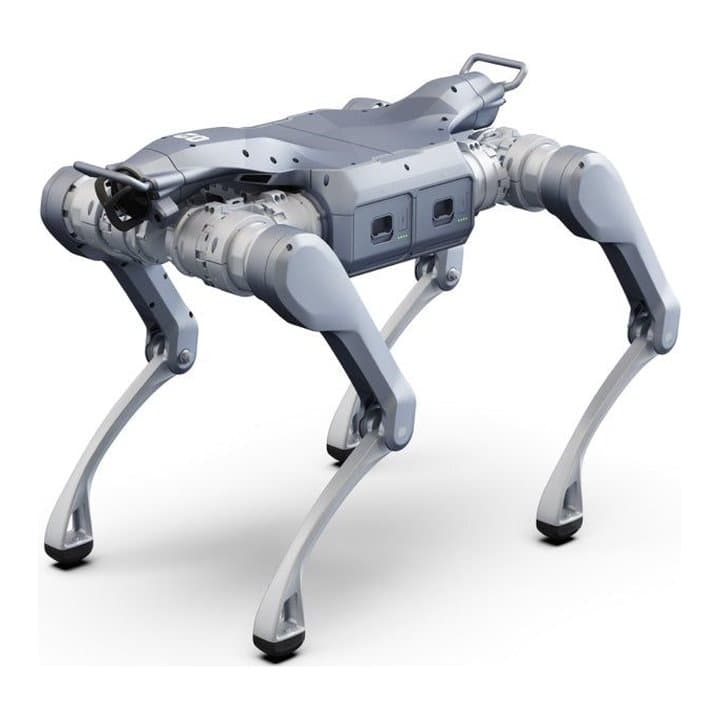
Quadruped robots
The round nobody skips.
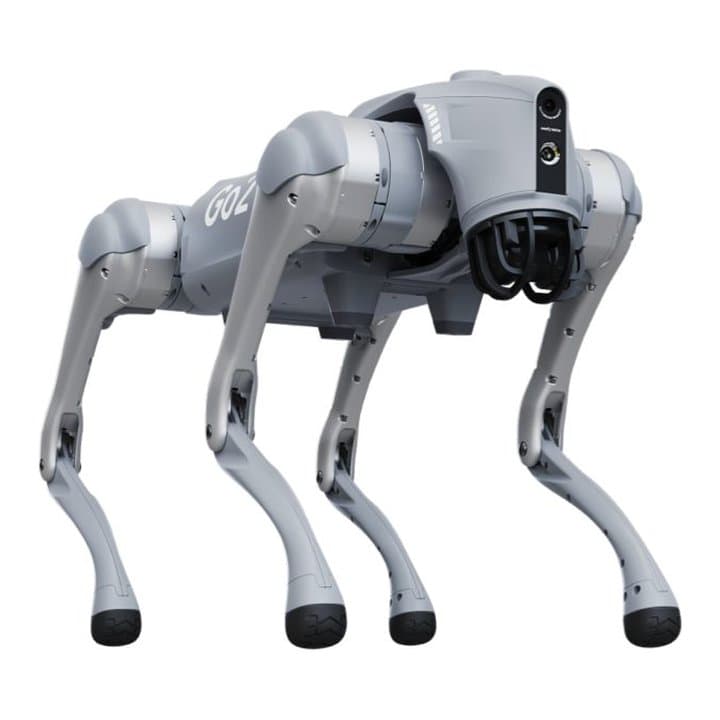
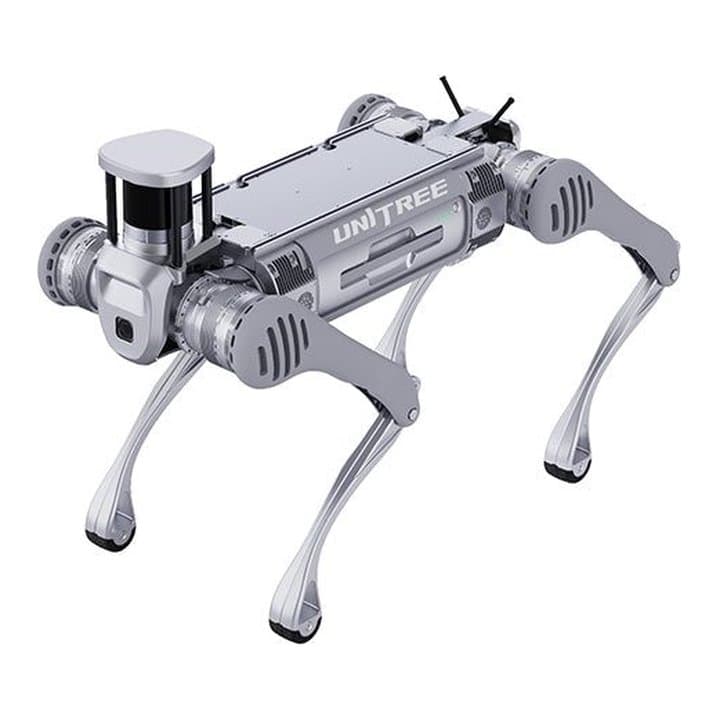
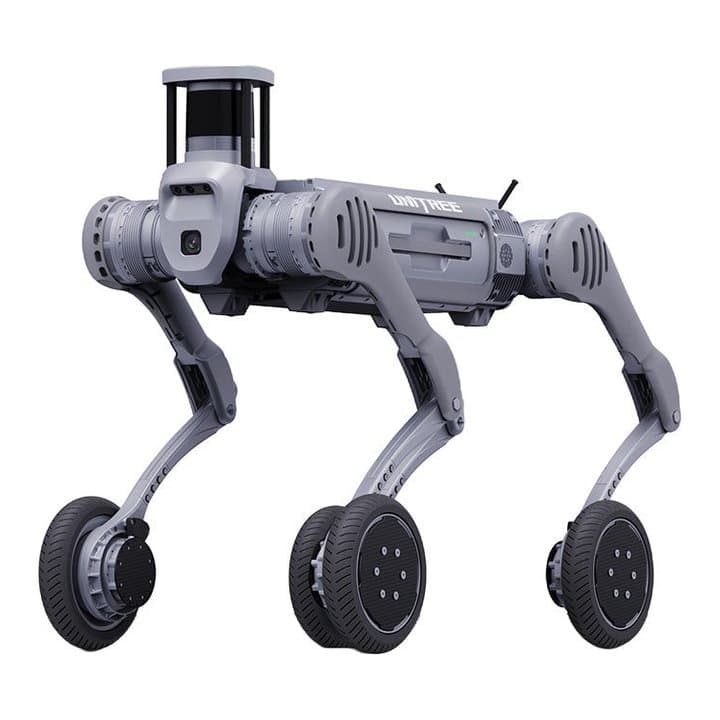
A night patrol, a measurement on a building site, an inspection of a space people would rather avoid. The quadruped climbs stairs, crosses thresholds and walks on gravel with a camera or a sensor on its back, on the same route every time. On patrols our operator is with it, until we agree otherwise.
- Where wheels give upSteps up to 15 cm, slopes up to 30 degrees, gravel and building sites.
- Equipment on its backA camera, a sensor, a light or an arm. The robot carries what the job needs.
- Fast across large sitesThe wheeled version reaches 15 km/h. A patrol does not take all day.
Exoskeleton
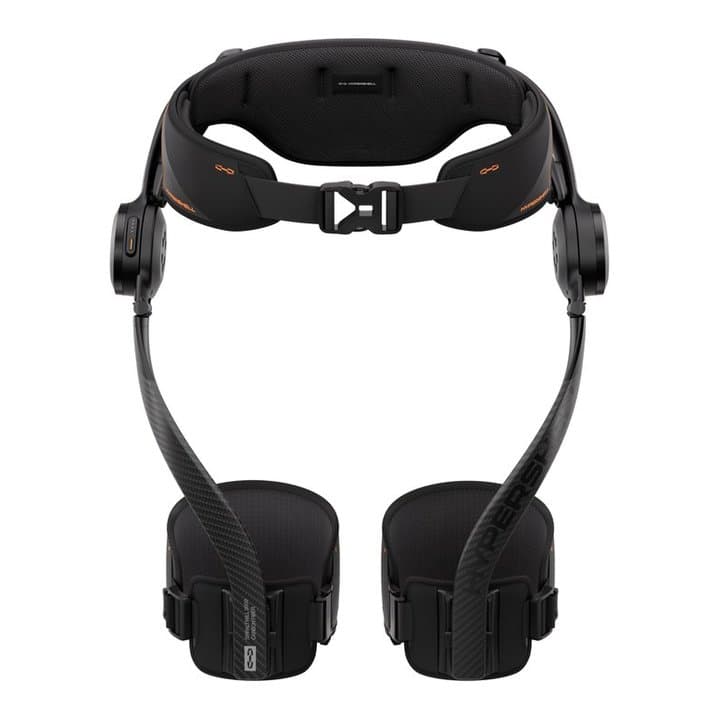
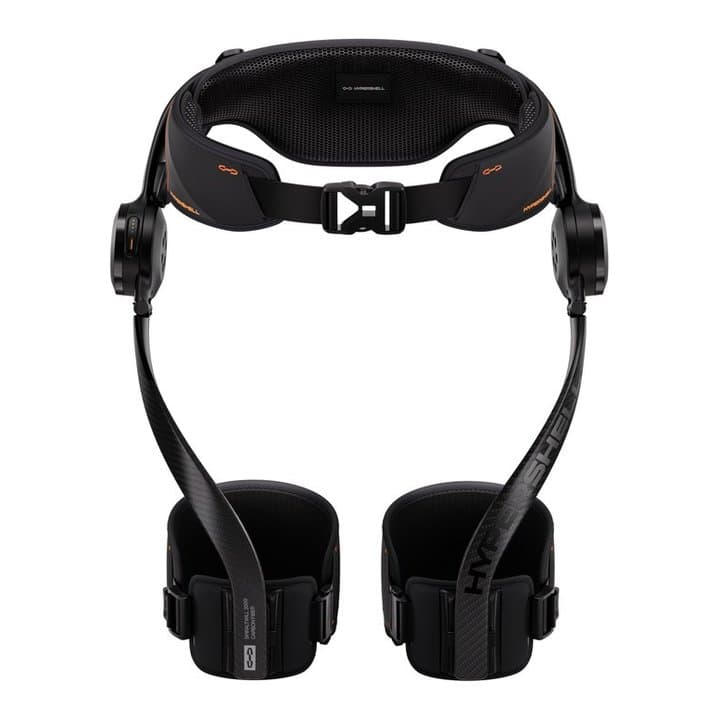
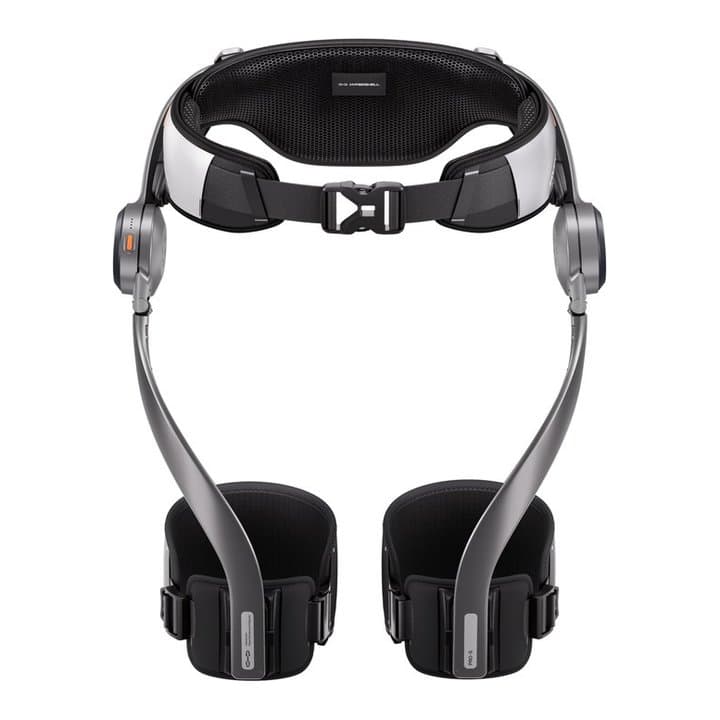
Walk further, with less effort.
The exoskeleton is worn on the hips and helps lift the leg at every step. The manufacturer states up to 39 percent less physical exertion. It weighs two and a half kilograms and folds, so it comes with you on a hike, into the field or to work.
- Up to 39 % less effortAccording to the manufacturer, on the Max S and Ultra S.
- 2.5 kg when wornIt goes on over your trousers and folds to 45 by 26 centimetres.
- Up to 30 km per batteryThe battery swaps, and Ultra S has two.
Autonomous vehicles and logistics
Material arrives on time. Nobody walks the route.
From the warehouse to the line, from the line to dispatch, from the ward to the lab: the route is known, the timing is known, only the load changes. An autonomous vehicle takes it over in every shift, without floor markings or rails. Your people work where their skills are needed.
- No building workThe vehicle finds its way by the space itself. You change the route in the console, not with tape.
- At night tooIt returns to the charger on its own during breaks. A night run is a different schedule, not overtime.
- From a shelf to a palletWe size the vehicle to what is moved and how often.
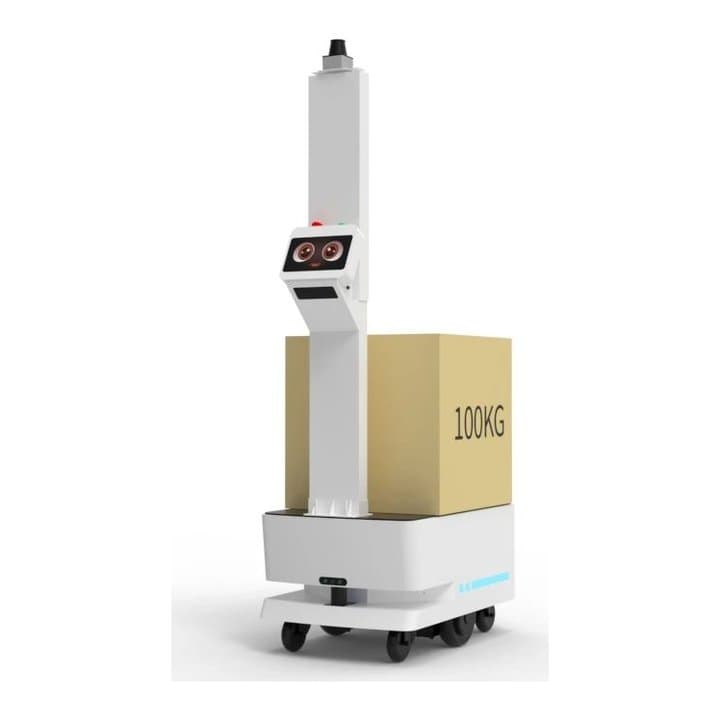
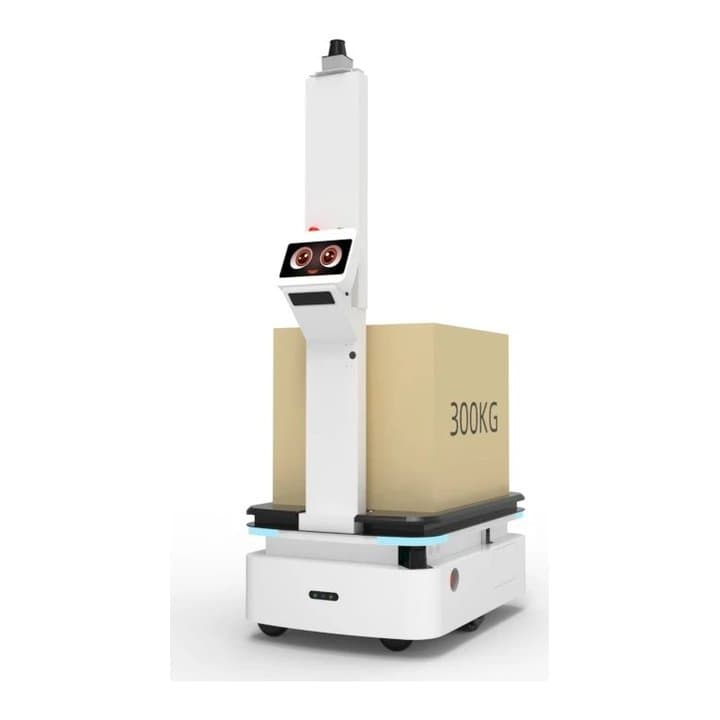
Autonomous vehicles and logistics
DUAL LASER FLY BOAT PRO FACTORY DELIVERY ROBOTSzie:792mm(L) · 0.3-1m/s · 79kg
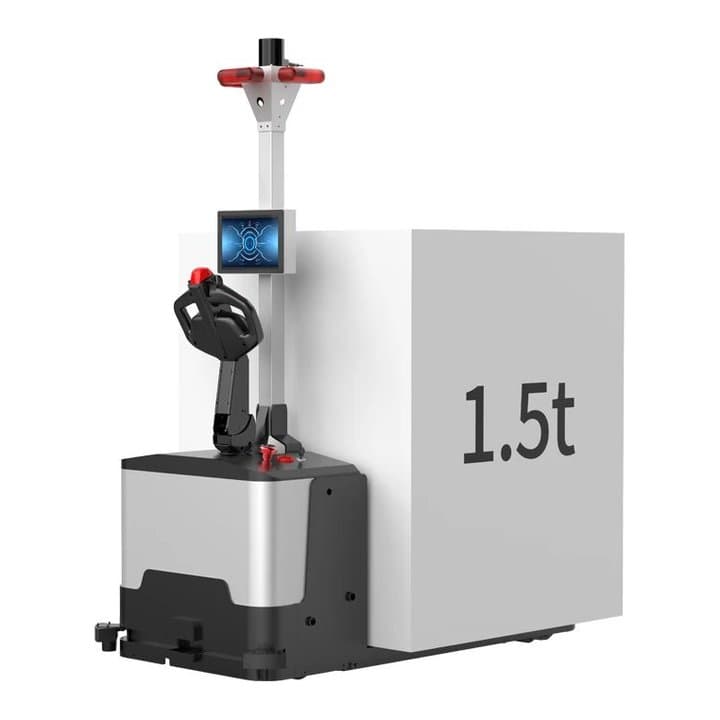
Autonomous vehicles and logistics
IRONHIDE AUTONOMOUS FORKLIFT1.5T · 1715mm(L)x940mm(W)x2080mm(H) Fork size:1150mm(L) · 120mm
Arms, sensors and machines
The last missing piece.
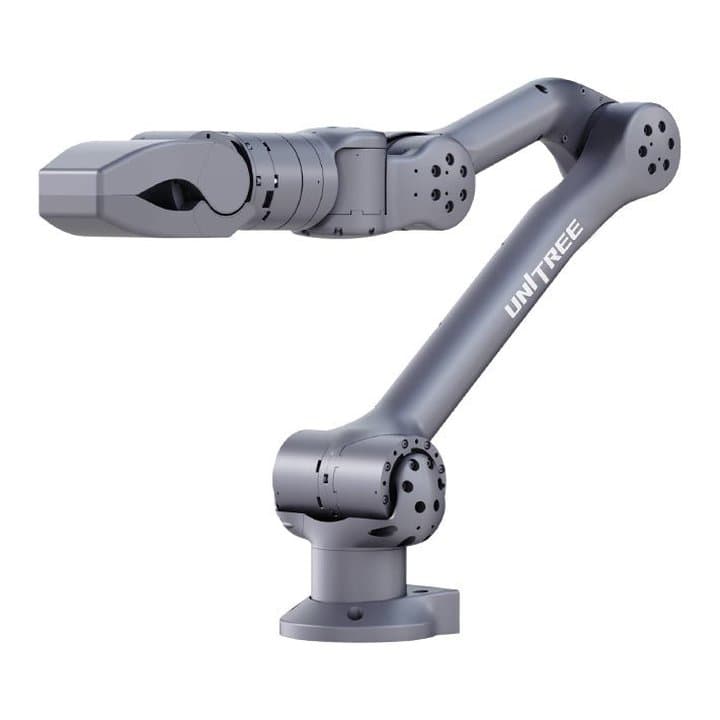
An arm you mount on a robot. A scanner that turns a space into a map. A machine that draws a line. You do not buy equipment like this because it exists, but when you know what it has to do. Tell us the task and we will tell you what does it.
- Arm and scannerA 740 mm reach and a 360 by 90 degree field of view, for the robots you already have.
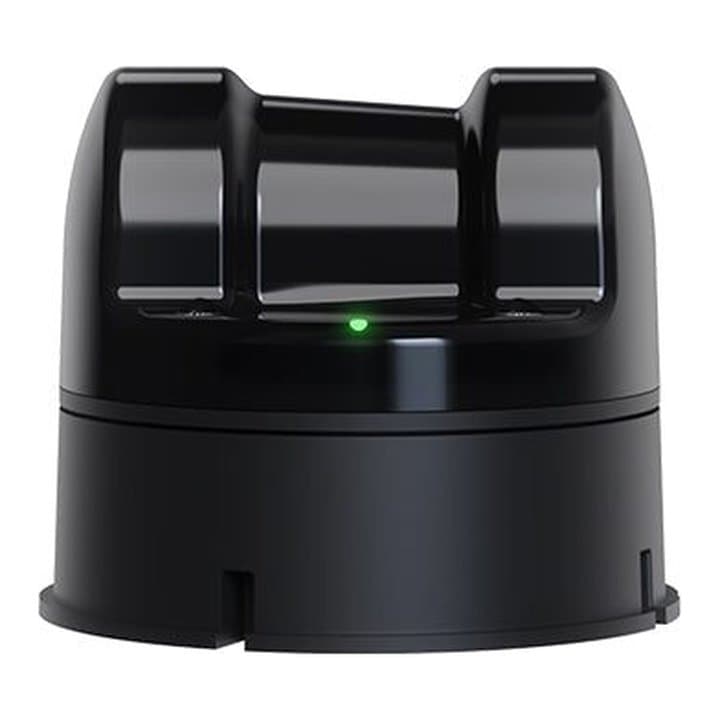
- A machine for one jobPainting lines on pitches and car parks, a job that repeats every season.
- The task firstWe do not sell from a catalogue. First we agree what the device has to do.
04 · What this is
The task first, then the model
Here are the robots and devices that do not stand next to a shopper, but work in the field, in the warehouse or on a person. A quadruped that patrols a site. An Exoskeleton that makes each step lighter. A vehicle that carries the load by itself. An arm that grips, a scanner that turns a space into a map and a machine that draws a line.
Devices like these are not bought on their own. They are bought once the job is already known and the last piece is missing. So the first question here is always what the device has to do, and only then which model that is.
05 · Measured
15 km/hquadruped on wheels
do 39 %less effort with the exoskeleton, manufacturer figure
1,5 tlifted by the autonomous forklift
740 mmreach of the robotic arm
Frequent questions
Does the arm fit any robot?
No. Every arm has its own mounts and its own way of connecting. Tell us which machine you would fit it to and we will check whether it is possible.
How long does delivery take?
It depends on the device. We do not stock these models, so we give a date only once we know which piece is the right one.
Do you help with the installation?
Yes. For devices that go onto an existing robot, the delivery includes fitting and a test, because that is the part where it goes wrong.
Enquiry
Tell us where the robot should stand.
Within two working days you get a proposal for your space and a date to see the robot working. No phone call, no obligation.
Or directlyinfo@vandri-robotics.com